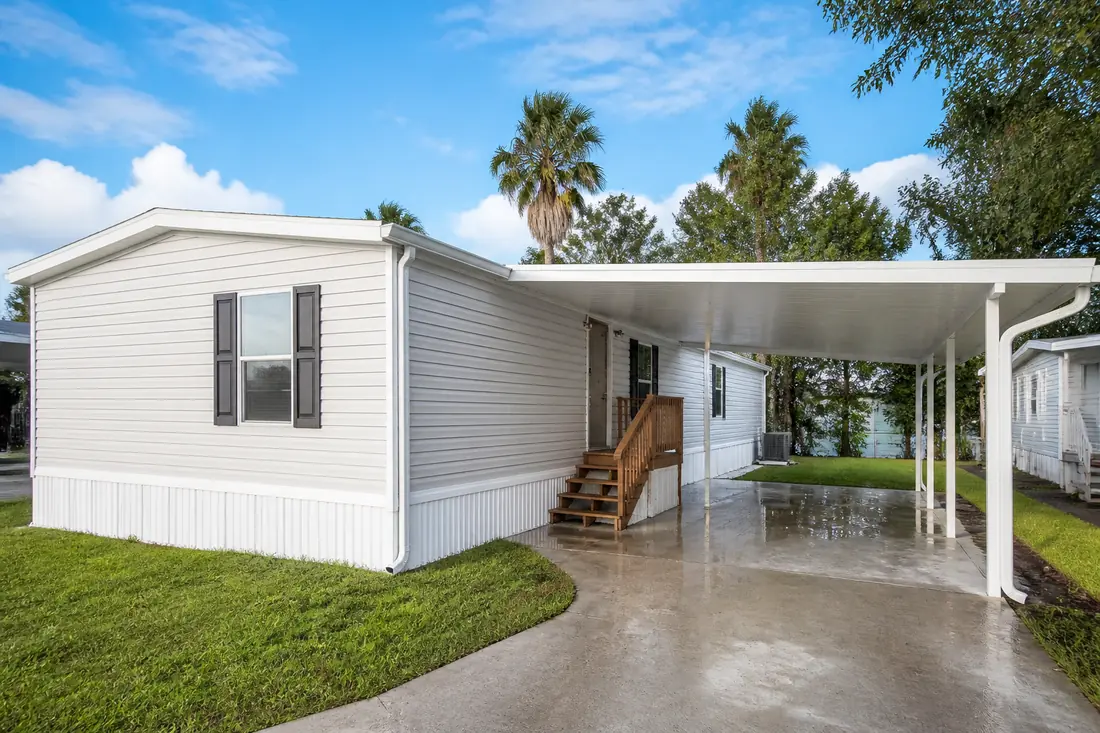
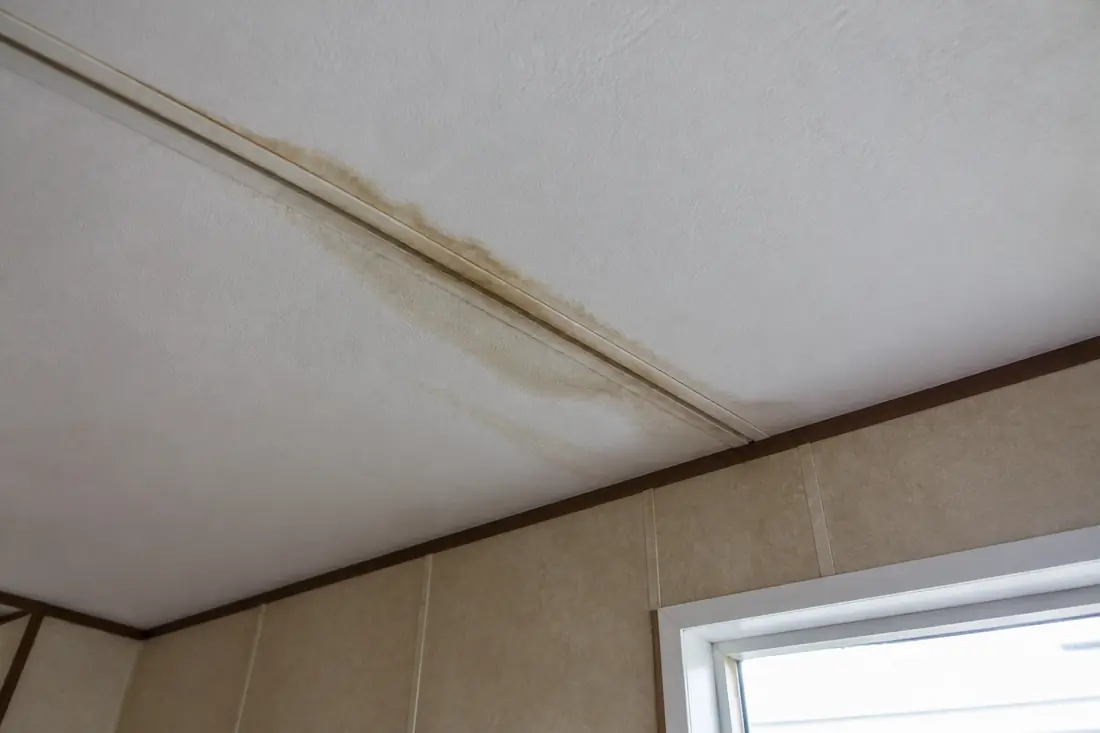
The stain shows up on the ceiling, usually along a seam, usually after one of the afternoon storms that run for weeks at a time through a Polk County summer. The home was set eight months ago. You call the retailer. Somebody takes your name and says they will get the installer out to look at it.
Nothing happens. You call again three weeks later and the person who answers has no record of the first call. The storms stop being a daily event, the stain dries to a ring, and one morning you work out that the home has been standing for eleven months and nobody has been out.
That sequence happens, and the important part of it is not the leak. Federal rules put a one-year clock on a manufactured home starting at installation, and that clock is what keeps you eligible for HUD’s Manufactured Home Dispute Resolution Program under 24 CFR Part 3288. What the clock measures is not when the defect gets fixed, or when anybody agrees it exists. It measures when the defect was reported. Whether you still have a claim at month thirteen comes down to whether something exists, somewhere, with a date on it.
Two things about that surprise almost everyone who runs into it. The first is that the day the clock started may not be the day you moved in. The second is that telling the retailer about a problem does not start any process at all. It only preserves your right to start one, and those are separate steps with separate deadlines. People lose the window by doing the first and assuming it was the second.
Last reviewed: 15 October 2026 against 24 CFR Parts 3282 and 3288 as published in the 2023 Code of Federal Regulations.
When the clock actually starts
The regulation does not leave “installation” to interpretation. 24 CFR 3288.3 defines date of installation as the date all utilities are connected and the home is ready for occupancy, as established, if applicable, by a certificate of occupancy.
Then it adds an exception that catches a lot of homes sold out of a dealer’s inventory. If the home has not been sold to the first person purchasing it in good faith for purposes other than resale by the date it is ready for occupancy, the date of installation is instead the date of closing under the purchase agreement or sales contract.
What the section sets up is a rule with one exception, and it is worth holding them apart. The rule is the ready-for-occupancy date: utilities connected, home ready, evidenced by a certificate of occupancy where one was issued. The exception applies only where the home had not yet been sold to a first good-faith purchaser by that date, and in that case the closing date governs instead.
Which means a unit that stood finished on a dealer’s lot for five months before anybody bought it did not quietly burn five months of its window, because it had not been sold when it became ready for occupancy. A home bought before it was ready runs on the ready-for-occupancy date, not on when the contract was signed. If you are working out where you stand, the two documents to find are the certificate of occupancy, if one was issued, and the closing paperwork, and then the question is which of the two situations above you were in.
One more word in the text is doing work. 24 CFR 3288.15(b) makes disputes eligible only where the defect was reported within one year after the date of the first installation. A home that is moved and reset later does not get a fresh year from the reset.
Reporting a defect and requesting help are two different acts
This is the provision worth reading twice. 24 CFR 3288.20(g) states that reporting an alleged defect “does not initiate” the HUD Manufactured Home Dispute Resolution Program, and only establishes whether the requirement of timely reporting has been met. The process itself begins when a request for dispute resolution is submitted, under 24 CFR 3288.25.
Read plainly: the one-year deadline applies to the report. The request can come later. Nothing in the rules asks you to file a request inside the year, which means a homeowner who reported a roof leak in month four and heard nothing for eight months has not lost anything, provided the report can be shown to have happened.
That cuts the other way too. Phoning the retailer every month for a year, waiting to be called back, is not a process anybody is obliged to advance. It preserves a right that only you can exercise.
What a report has to say, and who it can go to
The bar for content is low, deliberately. Under 24 CFR 3288.20(a), an alleged defect has to be reported to the manufacturer, the retailer, the installer, HUD, or a State Administrative Agency. Any of those five. A report to a state agency counts the same as a report to the company that sold you the home.
24 CFR 3288.20(c) sets the minimum contents: a description of the alleged defect, the name of the homeowner, and the address of the home. No particular form or format is required. There is no official complaint sheet to track down and no box to tick wrong.
As for how, 24 CFR 3288.20(b) recommends writing, naming email, written letter, certified mail and fax, and then says the existence of an alleged defect may also be reported by telephone. A phone call is a valid report. It is simply the hardest one to prove.
The dated record, and the note to make if you phone
24 CFR 3288.20(d)(1) is the provision that decides most of these. To establish timely reporting, the report should be made in a manner that will create a dated record demonstrating it was made within one year of installation, and the regulation gives three examples: certified mail, fax, or email.
If you report by telephone, the same paragraph tells you what to write down: the date, the time, the name of the person who received the report, the name of the business contacted, and the telephone number called. Then it explains why, in a sentence that is unusually direct for a federal regulation. If the matter goes to arbitration, the arbitrator and HUD will review whether there is sufficient evidence to believe the report was made on a timely basis.
Eligibility turns on whether you can show when the report was made. Neither HUD nor an arbitrator decides that from memory or from anybody’s good faith; they look at what contemporaneous evidence exists.
There is a second half to this that works in a homeowner’s favor and is almost never mentioned. Under 24 CFR 3288.20(d)(2), every report of a defect received by a manufacturer, retailer, installer or State Administrative Agency, including logs of telephonic complaints, must be kept for three years from the date of receipt. The business that answered your call in month four is required to still have a record of it in month thirty-six. An email you sent to yourself the same afternoon is easier, but the obligation is not only on you.
Who is presumed responsible, and what the program actually decides
24 CFR 3288.1(b)(1) sets out a presumption: if a home contains an alleged defect that is reported in the first year after installation and was not caused by the homeowner, then the manufacturer, retailer or installer is responsible for it.
It also helps to understand what kind of fight this is. The program exists to settle disputes among the manufacturer, retailer and installer about which of them has to correct the defect. 24 CFR 3288.15(a) makes manufacturers, retailers and installers the parties, and gives homeowners the right to initiate the process and to observe it. You are not suing anybody. You are forcing three businesses to work out between them whose problem the roof is.
Which is why one more provision matters. Under 24 CFR 3288.30(c), denial by all of the parties that any dispute exists does not stop the process going to mediation, and a screening neutral’s determination that a defect is properly alleged is prima facie evidence of a dispute. Everyone saying “there is nothing wrong with that roof” is not an exit.
The term “defect” is defined too, at 24 CFR 3288.3: a defect in the performance, construction, components or material of the home that renders the home or any part of it not fit for the ordinary use it was intended for, expressly including defects in construction, safety or installation. A roof that admits water is not a cosmetic complaint under that definition.
What happens once you request dispute resolution
The sequence has deadlines at every stage, and knowing them is the difference between waiting patiently and waiting too long.
A request can be mailed, emailed, faxed or phoned to the dispute resolution provider, with contact details at hud.gov or from HUD’s Office of Regulatory Affairs and Manufactured Housing at (202) 708-6423 or (800) 927-2891, per 24 CFR 3288.25(b).
24 CFR 3288.25(c) lists the six things the provider will ask for. Two of them are worth noticing now rather than later: item (3) is the date the report of the alleged defect was made, and item (4) is the name and contact information of whoever received it. The request form asks for exactly the two facts a dated record proves. If you cannot answer those two questions, 24 CFR 3288.30(b) allows the screening neutral to treat a request as withdrawn when the missing information does not arrive within a reasonable time.
From there:
- A screening neutral reviews the request. If a defect is properly alleged and timely reported, notice goes to the parties by overnight delivery, commercial carrier or fax, under 24 CFR 3288.33(a).
- If the parties have not started the separate Alternative Process within seven days of that notice, the matter is referred to mediation, per 24 CFR 3288.33(b).
- Mediation allows the parties 30 days from commencement to reach a settlement. Where the screening neutral has determined the defect appears to present an unreasonable risk of injury, death, or significant loss or damage to valuable personal property, that drops to a maximum of 10 days. Both are in 24 CFR 3288.35(b).
- Corrective repairs under a mediated settlement must be completed no later than 30 days after the agreement is signed, unless a longer period is agreed in writing by the parties and the homeowner, under 24 CFR 3288.35(b)(3).
- If mediation fails, any party or the homeowner may initiate nonbinding arbitration within 15 days of the mediation deadline expiring, per 24 CFR 3288.40(a)(1). The arbitrator may conduct on-site inspections, dismiss frivolous allegations, make findings of defect and culpability, and recommend how responsibility for paying should be apportioned when more than one party is at fault, under 24 CFR 3288.40(c).
- HUD reviews the recommendation and issues an order, under 24 CFR 3288.45.
Over the top of all of it sits a definition. 24 CFR 3288.3 defines timely resolution as resolution within 120 days of the request, reduced to 60 days where the defect presents an unreasonable risk of injury, death, or significant loss or damage to valuable personal property.
Whether Florida runs its own program
24 CFR 3288.10 gives the test rather than an answer. The HUD-administered program applies in each state that has not established a state dispute resolution program complying with the Act and accepted by HUD under subpart D of the part. States with an accepted program run their own; the rest are HUD-administered states.
This article does not tell you which Florida is, because that determination is not in the regulation and the HUD page that lists it did not serve a page to an automated request when this guide was written on 15 October 2026. The honest answer is that it has to be checked rather than assumed, and the regulation itself tells you where: 24 CFR 3288.20(e) says contact information for State Administrative Agencies is available at hud.gov, and that you should contact the appropriate agency to find out the method for making a report.
Practically, that is a five-minute phone call to HUD’s Office of Regulatory Affairs and Manufactured Housing on the numbers above, and it is worth making before you choose where to send a report rather than after. Reporting to a State Administrative Agency satisfies 24 CFR 3288.20(a) either way, so a report sent to a state agency is not wasted while you work out which program governs.
What an inspection is trying to separate
A dated report establishes timeliness. It does not establish what caused the leak, and that question is where a first-year roof complaint usually turns. A defect in construction or installation is the manufacturer’s, retailer’s or installer’s problem under 24 CFR 3288.1(b)(1). Storm damage and ordinary wear are not, and on an eight-month-old home in Central Florida both are plausible.
An inspection tends to run inside-out, because the place water appears is rarely the place it entered.
It starts with the stain. A discolored batten strip along a ceiling seam points somewhere different from a ring around a light fixture or a damp patch at an outside wall. Water travels along the underside of a roof deck and along framing before it finds a path down, so the entry point is often feet away and uphill.
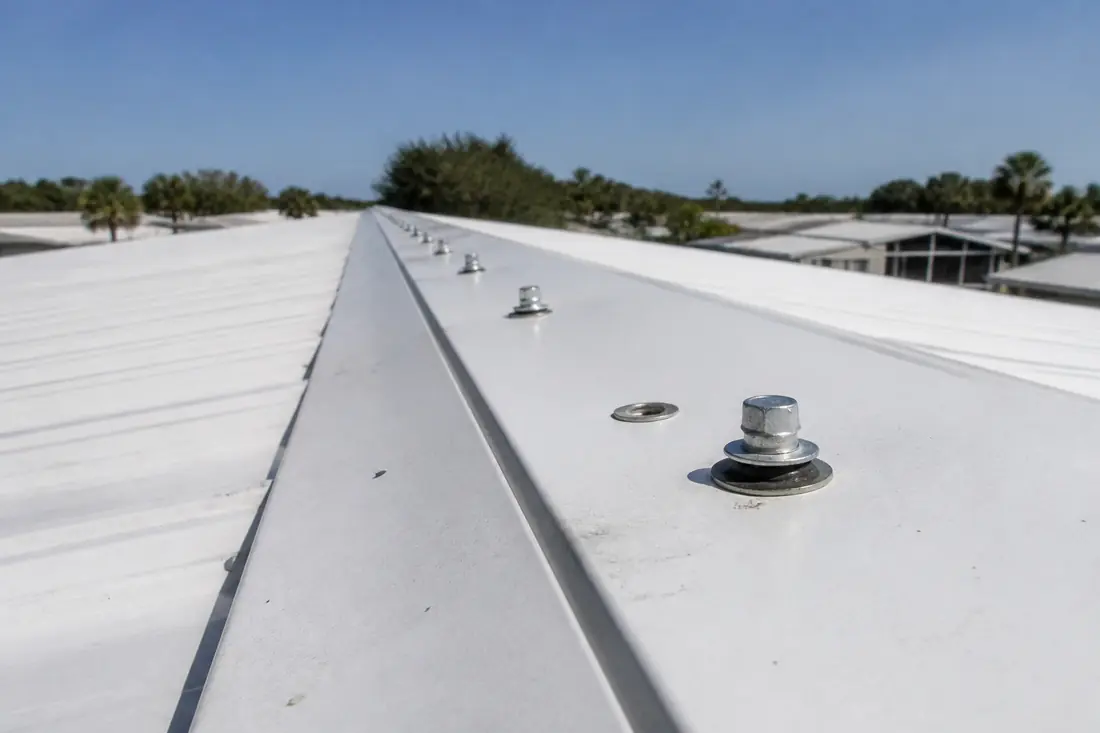
Then the roof itself: the ridge, and the fastener line along it. On a metal roof the screws carry sealing washers, and a washer squeezed flat or left standing proud of the panel is a workmanship question rather than a weather one. A uniformly over-driven row suggests how the roof was fastened. A single lifted screw after a storm suggests something else.
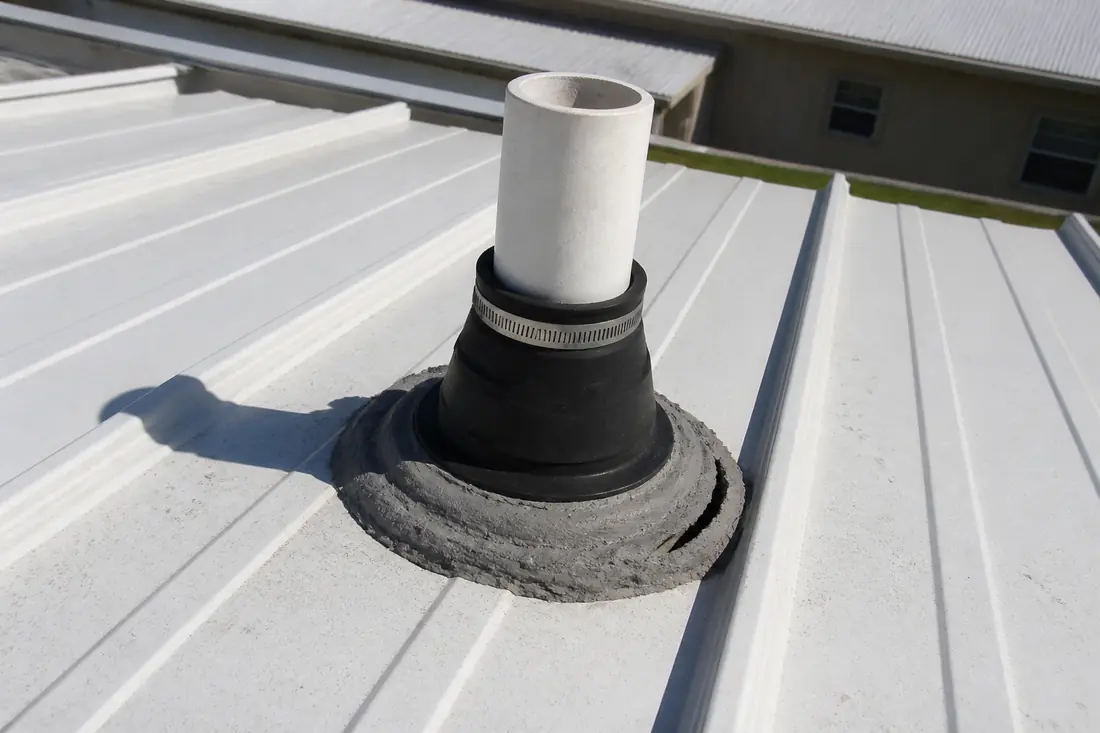
Then the penetrations, which is where most of these end. Vent pipes, flues and any roof-mounted equipment are sealed with boots and sealant, and sealant that has cracked and lifted along one side within a year of installation is not the same finding as sealant that has had a decade of Florida sun.
Then the perimeter and the eaves, then the ventilation path through the cavity, because a stain that turns out to be condensation rather than a leak changes both the repair and who is responsible for it.
One piece of sequencing matters more than it sounds. If the home is inside its first year and the roof is leaking, having the roof rebuilt or covered over before anybody has documented the cause can make the responsibility question unanswerable. A roof-over is a reasonable answer to a tired twenty-year-old roof. On a home still inside its federal window, get the condition recorded first and decide afterwards, because the evidence is on the roof and a new one covers it.
The manual you were supposed to be given
Two documents exist specifically to tell homeowners about this window, and most people have never knowingly read either.
24 CFR 3282.207(a) requires the manufacturer to provide a consumer manual with each manufactured home entering the first stage of production on or after 31 July 1977, under section 617 of the National Manufactured Housing Construction and Safety Standards Act, 42 U.S.C. 5416. Paragraph (b) requires it to be placed in the home before it leaves the plant, in a conspicuous location, in a manner likely to make sure it is not removed until the purchaser removes it.
If you never got one, paragraph (c) is useful: told that a purchaser did not receive a manual, the manufacturer has 30 days to provide it. Paragraph (d) bars any retailer or distributor from interfering with its distribution.
The manual is required to carry two specific blocks of text. Under 24 CFR 3282.207(e)(1), a section headed “Dispute Resolution Process” explains the state and HUD programs, and states in terms that the HUD program “is not for cosmetic or minor problems in the home.” Under paragraph (e)(2), a section headed “Additional Information” on the HUD program sets out the reporting steps, and it is where the one-year requirement and the advice to create a dated record appear in language written for homeowners rather than for lawyers.
There is a third document, earlier in the chain. 24 CFR 3288.5 requires the retailer, at the time of signing a contract for sale or lease, to give the purchaser a notice naming the HUD program, pointing at those two manual sections, and stating that these programs “are not warranty programs and do not replace the manufacturer’s, or any other person’s, warranty program.”
Worth knowing, if only because a manual that was never handed over is a requirement somebody has already missed.
After the first year
The window closing does not empty the file.
The manual language at 24 CFR 3282.207(e)(1) says that even after the one-year period, manufacturers have a continuing responsibility to review certain problems that affect the intended use of the manufactured home or its parts, but for which correction may no longer be required under federal law. Read carefully: the duty to look at it survives, and the obligation to fix it under these rules may not. That is a narrower thing than it first appears, and it is still worth a letter.
Separately, and more usefully for most people, none of this is a warranty. 24 CFR 3288.1(b)(2) states that the part is not a warranty program and does not replace the manufacturer’s or any other warranty program, which may have its own requirements. A manufacturer’s roof warranty, an installer’s workmanship warranty and a product warranty on the roofing material itself all run on their own terms and their own clocks. Missing the federal window says nothing about any of them.
Five ways people lose the window
Phoning, and trusting the call was logged. The call is a valid report under 24 CFR 3288.20(b). It is just the one that leaves nothing on your side of the conversation. Send an email after the call summarizing it, if only to yourself.
Waiting to be called back until the year runs out. 24 CFR 3288.20(g) is explicit that a report starts nothing. If the report has been made, the clock on your report is satisfied and the next move is yours.
Reporting the problem without the three required facts. A description of the defect, your name and the home’s address, under 24 CFR 3288.20(c). An email that says only “the roof is still leaking” in reply to a service thread may not carry the address of the home.
Repairing it first. Understandable with water coming in, and sometimes unavoidable. Photograph and document before and during, because the condition is the evidence.
Assuming the clock started at move-in. It starts at the date of installation as defined in 24 CFR 3288.3, which in an inventory sale can be the closing date instead.
If you are inside the year right now
Do these in this order. Write the report today, with the description, your name and the address of the home. Send it by a route that dates itself, and send it to the manufacturer, the retailer or the installer, and consider the State Administrative Agency as well. Keep your copy.
Ask for the consumer manual if you never received one, which starts a 30-day obligation. Have the roof looked at and the condition recorded before anybody works on it, whether that is a roof inspection or a leak investigation. Then, if nothing moves, submit a request for dispute resolution rather than waiting for somebody to volunteer.
The thing most worth taking away is the cheapest. The difference between a claim that survives and one that does not is usually a single email, sent the same afternoon the stain appeared, to an address nobody disputes, with the date on it.
If you are dealing with a leak on a recently set home and want the condition documented properly before any repair work changes it, an inspection that records what is there is the right first step. Our guide to what a roof-over does to a manufactured home covers the other end of the same decision, when the roof is simply old.
This guide explains the process in plain language and is not legal advice. The agency’s current regulations and its determination for a specific home control what is actually required.
Sources
- 24 CFR Part 3288 — Manufactured Home Dispute Resolution Program (2023 CFR, govinfo XML). Section 3288.1(b)(1), the presumption of responsibility for a defect reported in the first year and not caused by the homeowner, and the statutory basis at section 623(c)(12) of the Act, 42 U.S.C. 5422(c)(12); Section 3288.1(b)(2), the statement that the part is not a warranty program; Section 3288.3, the definitions of “Date of installation”, “Defect”, “Timely reporting” and “Timely resolution”, the last supplying the 120-day and 60-day periods; Section 3288.5, the retailer notice required at the time of signing and its verbatim language; Section 3288.10, the test for when the HUD-administered program applies; Section 3288.15(a) and (b), the parties and observers, and the one-year eligibility requirement measured from the date of first installation; Section 3288.20(a) to (g), the five permitted recipients of a report, the recommended and permitted forms, the three minimum contents, the dated-record provision and the contents of a contemporaneous telephone note, the three-year retention obligation covering logs of telephonic complaints, the HUD reporting addresses and numbers, and paragraph (g), under which a report does not initiate the program; Section 3288.25(b) and (c), the request routes and the six items requested, including the date of the report and the identity of its recipient; Section 3288.30(a) to (c), screening, treatment of an insufficient request as withdrawn, and the effect of all parties denying a dispute; Section 3288.33(a) and (b), notice to the parties and the seven-day Alternative Process period; Section 3288.35(b), the 30-day and 10-day mediation periods and the 30-day deadline for corrective repairs; Section 3288.40(a)(1), (b) and (c), the 15-day period to initiate nonbinding arbitration and the arbitrator’s authority; and Section 3288.45, HUD review and order.
- 24 CFR 3282.207 — Manufactured home consumer manual requirements (2023 CFR, govinfo XML). Paragraph (a), the consumer manual requirement for homes entering the first stage of production on or after 31 July 1977 under section 617 of the Act, 42 U.S.C. 5416; paragraph (b), placement in a conspicuous location before the home leaves the plant; paragraph (c), the 30-day replacement obligation; paragraph (d), the bar on retailer or distributor interference; paragraph (e)(1), the “Dispute Resolution Process” block, including the statement that the HUD program is not for cosmetic or minor problems and the sentence on the manufacturer’s continuing responsibility to review certain problems after the one-year period; and paragraph (e)(2), the “Additional Information” block on the HUD program, which carries the one-year reporting requirement, the advice to report in a manner creating a dated record, and the mediation, arbitration and HUD order sequence. The section as published carries the citation line [61 FR 10860, Mar. 15, 1996, as amended at 72 FR 27228, May 14, 2007], and paragraph (f) refers to HUD guidelines published in the Federal Register on 15 March 1996.